

Most homeowners find out their policy doesn’t cover flooding after it’s already too late to do anything about it. Here’s what you need to know, and why the 30-day waiting period means you can’t afford to wait.
I’ve seen this play out in real life. After a hurricane, a homeowner had significant damage: a damaged roof, mold spreading through the house because the power was out for two weeks.
When the adjuster came out, the determination was that the water entered from rising floodwater, not through the roof. Her homeowners policy covered wind damage. It didn’t cover flooding. Her total out-of-pocket exposure was tens of thousands of dollars; her home was uninhabitable, and she didn’t have flood insurance. This is not an unusual story. It’s the story most flood claims tell. And it’s almost always preventable.
Your homeowners policy does not cover flooding, full stop
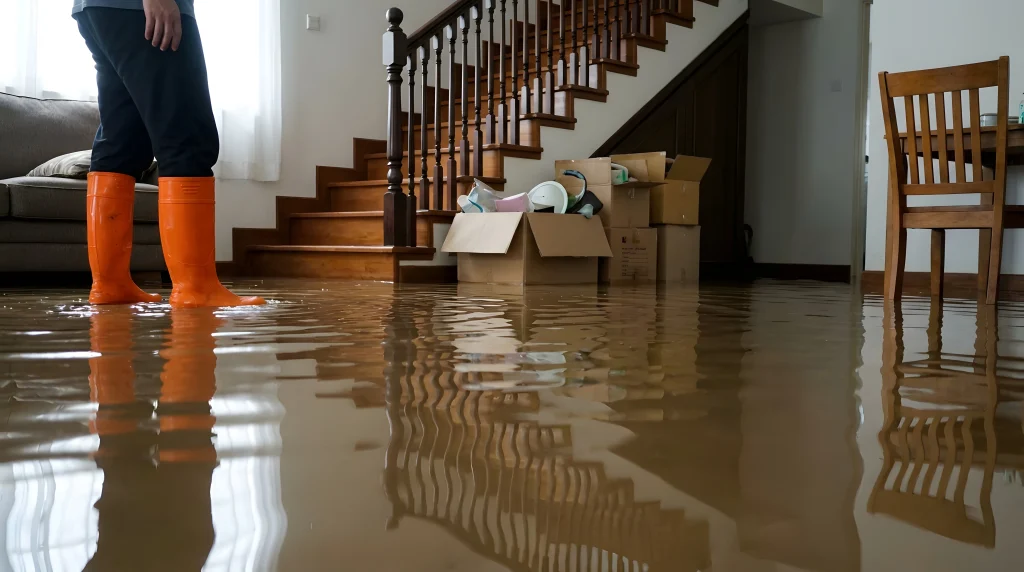
This is the most important thing to understand about flood insurance, and it surprises more people than it should. Standard homeowners insurance does not cover flooding. It doesn’t matter how the water gets in. If it’s rising water from a storm surge, a river overflowing, or standing water after heavy rain that enters your home, it’s a flood claim. And a flood claim requires a separate flood insurance policy.
This isn’t a technicality buried in fine print. It’s a fundamental coverage gap that exists in every standard homeowners policy. Water coming through a roof damaged by wind may be covered. Water rising from the ground is not. The distinction matters enormously when an adjuster is standing in your living room deciding what your claim is worth.
NFIP vs. private flood insurance: what’s the difference and which is right for you

Most flood insurance in the United States is written through the National Flood Insurance Program, which you’ll see abbreviated as NFIP. The NFIP is federally backed, which means the pricing is set by the government; one agency selling you an NFIP policy will charge the same as any other agency for the same property.
NFIP coverage has limits that are important to understand before you buy. Building coverage maxes out at $250,000. Personal property coverage maxes out at $100,000. And NFIP policies typically don’t include loss of use coverage, meaning if you can’t live in your home while it’s being repaired after a flood, the NFIP isn’t paying for your hotel or rental.
Private flood insurance is the alternative. Private policies can offer higher coverage limits for properties where $250,000 isn’t enough to replace what you’ve built. They can include loss of use coverage, additional deductible options, and other benefits not available through the NFIP. Private flood insurance also often doesn’t carry a waiting period, whereas NFIP policies typically require a 30-day wait.
Which is right for you depends on your home’s value, your risk level, and what gaps you can tolerate. An agent who knows your area can walk you through the comparison, but the most important thing is having some form of flood coverage in place.
The 30-day waiting period: why you can’t wait for a storm to buy flood insurance
NFIP flood insurance typically comes with a 30-day waiting period from the date you pay your premium. That means if you buy a policy today, you’re not covered until 30 days from now.
The waiting period doesn’t apply when flood insurance is required by your mortgage lender at closing. But for everyone else, the clock starts when the premium is paid, not when the storm is named, not when the hurricane watch is issued.
Every season, people watch a storm develop in the Gulf and try to buy flood insurance. By that point, it’s too late. The 30-day clock is not negotiable. The time to buy flood insurance is before you need it, ideally well before hurricane season begins.
Not being in a flood zone doesn’t mean you’re not at risk

Flood zone designations from FEMA indicate statistical likelihood, not certainty. If your home is outside of a designated flood zone, that means the modeling suggests your property would flood roughly once every 250 years. A property in a primary flood zone faces that risk once every 100 years.
Those are averages. They don’t account for changing weather patterns, new development upstream that changes how water drains, ground saturation from back-to-back rain events, or simply being in the wrong place during an unusually intense storm.
We’ve all seen the footage from events that no model predicted: communities far from the coast that took on water, neighborhoods that had never flooded in living memory that suddenly were underwater. Western North Carolina is a recent and painful example. The risk doesn’t require a coastline or a flood zone designation.
One of the most useful things you can do is run what’s called a flood zone determination for your property. This tells you officially where your home falls in FEMA’s mapping. But even if that determination comes back outside a high-risk zone, the question worth asking is what your yard looks like after a heavy rain. If you regularly have standing water, if the ground stays saturated for days, if a nearby ditch fills and stays full, those are signs that your drainage situation is worth paying attention to.
Southeast-specific risks that go beyond the storm track
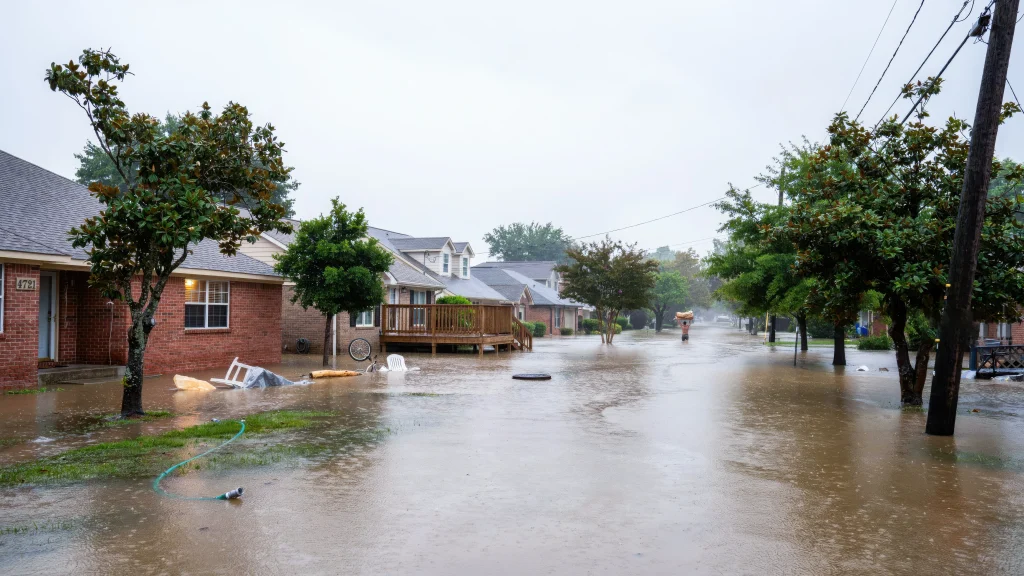
In Georgia and across the Southeast, the flood risk conversation shouldn’t start and end with hurricane season. Here’s what we see affect homeowners outside the obvious scenarios.
Ground saturation from consecutive rain events creates flooding risk that isn’t tied to any named storm. The weeks leading up to a hurricane can drop enough rain to saturate the soil completely. When the storm arrives, even a storm that’s weaker than expected, there’s nowhere for the water to go because the ground is already full. This is exactly how a moderate storm can cause severe flooding in neighborhoods that had never flooded before.
Flash flooding from heavy localized rain is increasingly common. A significant storm doesn’t have to make landfall near you to dump dangerous amounts of rain. Bands of rainfall from systems hundreds of miles away can drop three to five inches in a few hours, faster than drainage systems can handle.
New construction changes water flow. When land is developed and paved over, the natural absorption of rainfall disappears. If your neighborhood has seen significant new construction nearby, the drainage dynamics have changed, sometimes in ways that put more water toward older properties that used to drain fine on their own.
What flood insurance actually covers, and what it doesn’t

Understanding what your flood policy covers ahead of time prevents an unpleasant conversation after a claim.
An NFIP building policy can cover the structure of your home and systems within it, electrical, plumbing, HVAC, flooring, cabinets, and built-in appliances. An NFIP contents policy covers your personal belongings, furniture, clothing, electronics, and most items you’d expect.
What flood insurance typically does not cover includes currency, precious metals, and valuable papers. Vehicles are excluded; your car goes through auto insurance, not flood. Outdoor property like landscaping, fences, and swimming pools is generally not covered. Basement improvements may have limited coverage depending on the elevation of your finished space. And as noted, NFIP policies don’t cover additional living expenses if you’re displaced during repairs.
Knowing these limits before a claim helps you plan. If you have a finished basement you’ve invested in, or if your home’s contents value significantly exceeds $100,000, those are worth discussing with your agent.
Is flood insurance worth the cost if you’re not in a high-risk area?

The straightforward answer: yes, if you’re in an area that sees significant rain, sits in low-lying terrain, or faces hurricane exposure.
Here’s a number that puts it in perspective. Four inches of water in a 1,200-square-foot home can produce over $70,000 in rebuilding costs. That’s not a catastrophic flood scenario. That’s a few inches of water that damaged flooring, drywall, cabinets, and systems throughout the house. At $1,000 to $2,000 a year for a flood insurance policy, the math is not a close call.
Flood insurance is one of those coverages that feels unnecessary until the one time it isn’t. The families who are most financially devastated by flooding are almost always the ones who made a reasonable judgment that they weren’t at significant risk, and who then had a year that changed their minds permanently.
If your lender is requiring flood insurance, here’s where to start
Mortgage lenders are required to mandate flood insurance when a property is in a designated special flood hazard area. If you’re getting this requirement for the first time, the process is more straightforward than it might feel.
Start by understanding what the premium is going to mean for your monthly payment. Newer homes built to current elevation standards tend to be less expensive to insure than older homes built at lower elevations. Your agent can pull an NFIP quote quickly once they have the property address.
From there, compare that NFIP quote against private flood options if your home’s value or coverage needs exceed what the NFIP provides. The right answer depends on your specific property.
If you don’t have an agent yet, your lender or realtor will usually have recommendations. Ask specifically for agents who work frequently in your area and have experience with flood coverage; local knowledge matters here more than in almost any other coverage category.
If you’d like to talk through what flood coverage makes sense for your home, or get a quote to compare your options, reach out to our team at Peachy Insurance. We know the flood risks in this region, and we can help you figure out what level of protection fits your situation.

What sets Carissa apart is her focus on the full picture. While a lot of the industry fixates on signing new customers, she has always believed that keeping people well-served matters just as much. Her work has centered on training the people who talk to customers, improving the processes that affect everyday interactions, and making sure nothing falls through the cracks.
She holds an MBA from the University of Georgia Terry College of Business and is a certified Project Management Professional (PMP®). Outside of work, she loves spending time on Florida's gulf coast, trying new restaurants, cooking, and making memories with her nieces and nephews. She is also a lifelong Survivor and The Challenge fan, and is always ready to debate the greatest competitors of all time.
- What First-Time Homebuyers Don’t Know to Ask About Their Insurance - September 23, 2026
- Flood Insurance: What Your Home Policy Doesn’t Cover and Why It Matters More Than You Think - August 23, 2026
- The Landlord’s Guide to Property Insurance: What You Actually Need and What You’re Probably Missing - August 23, 2026
